Company knowledge is everywhere, and it can't leave the building.
Policies, specs and reports live across drives and inboxes. Public AI tools could answer questions about them, but the data can't leave, and different teams aren't allowed to see each other's documents.
- ×Answers buried across drives
- ×Outside AI tools not allowed
- ×No control over who sees what
- ×No way to check where an answer came from
- →Ask in plain language
- →Models run on the company's own hardware
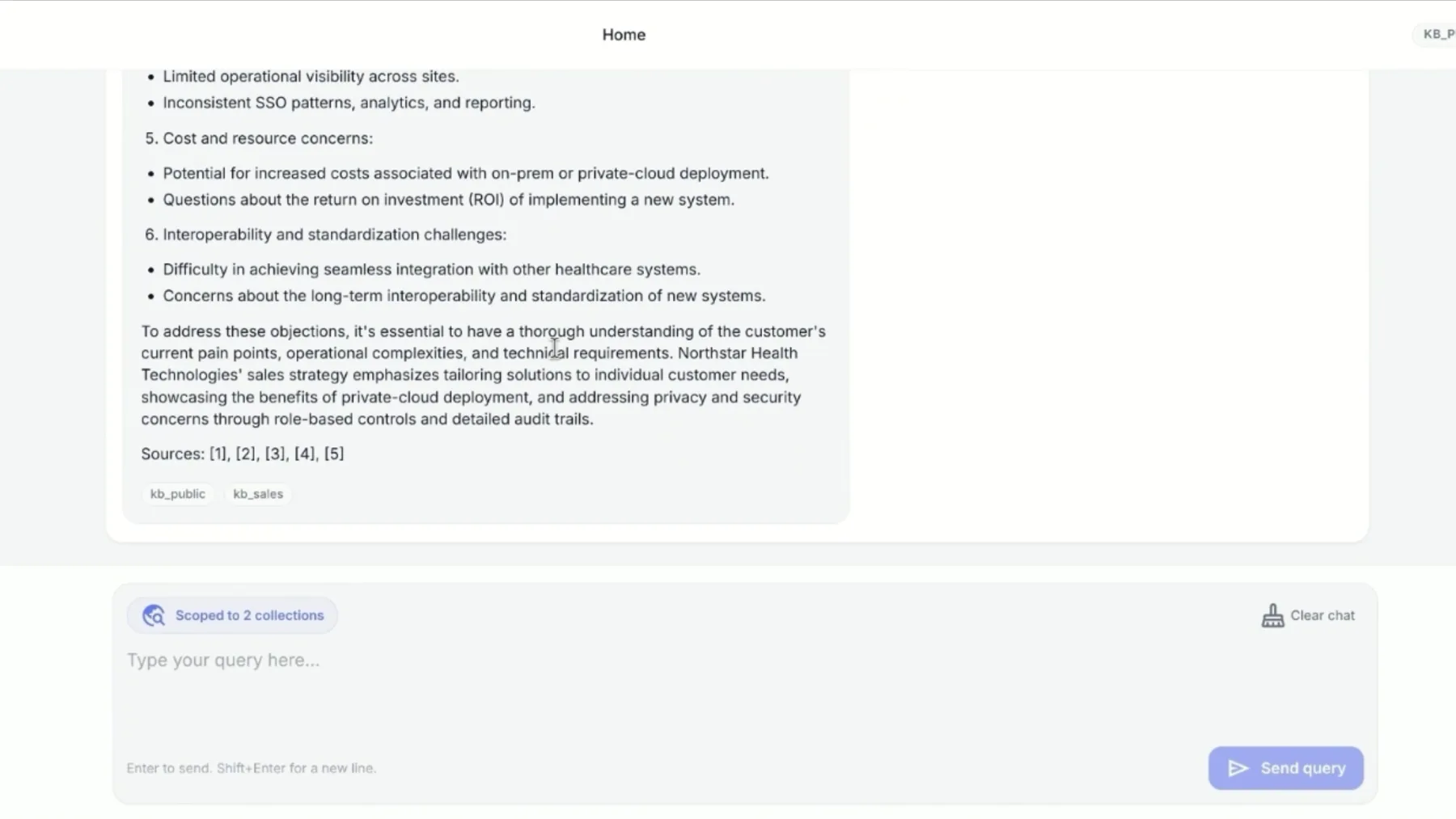
- →Answers only from what you're allowed to see
- →Every answer cites its sources
What we built
A chat interface on top of a governed document library, with company sign-in and an approval step before anything enters the knowledge base.
Ask
- →Chat over your own documents
- →Answers with clickable citations
- →Document preview from any citation
- →Collections you can access, shown up front
Govern
- →Sign in with the company's SSO
- →Roles synced from the company directory
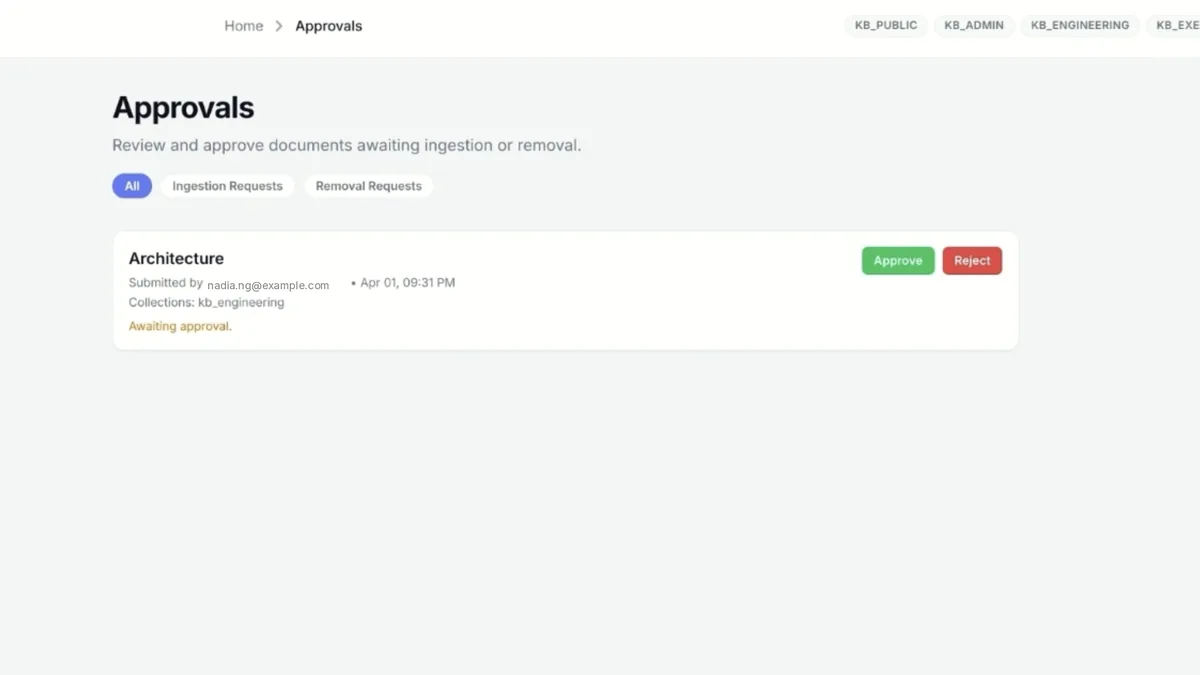
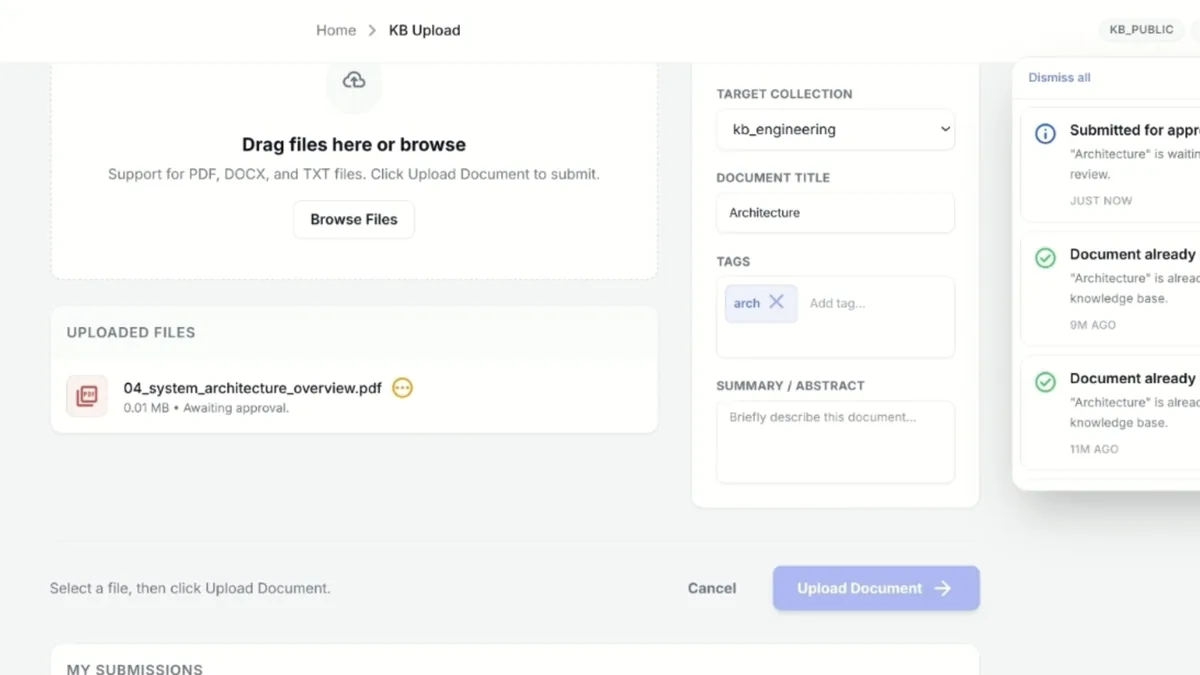
- →Uploads approved before they're indexed
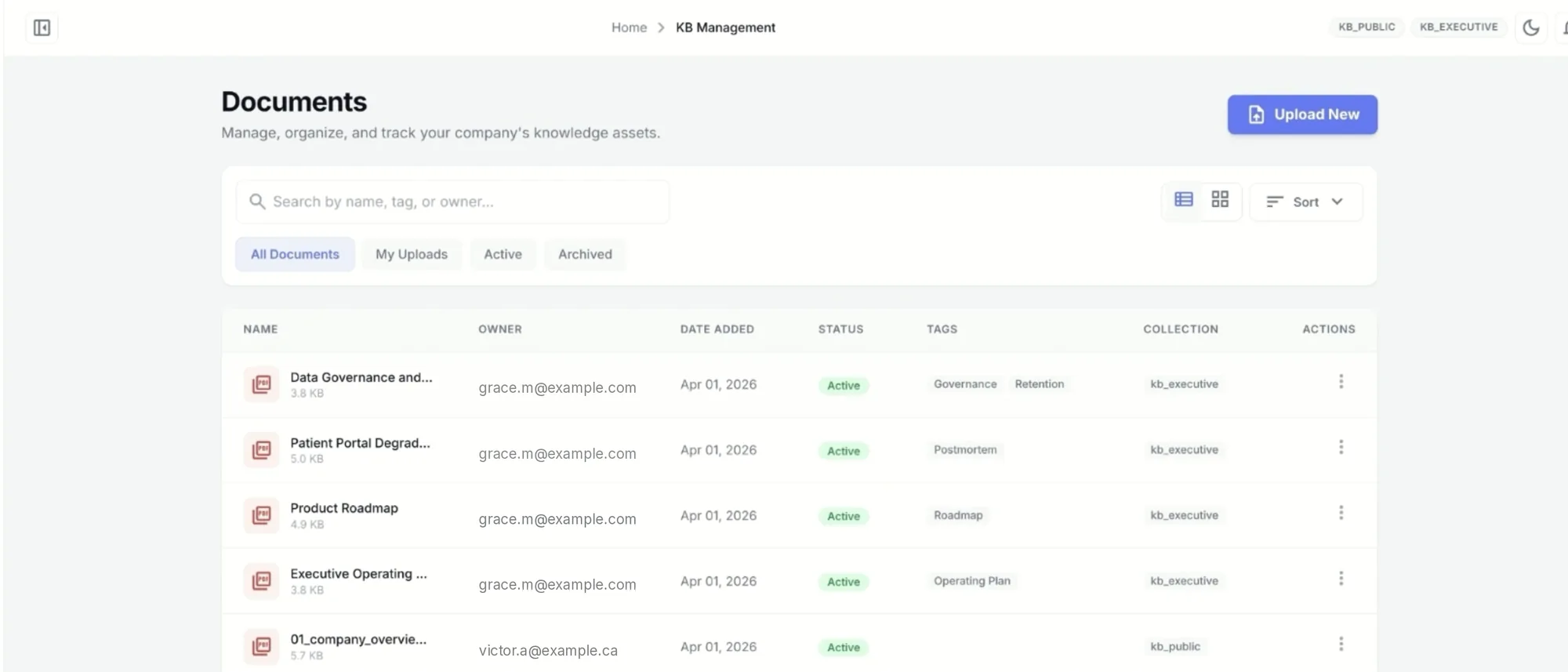
- →Archive and management views for admins
Run
- →Local language models, no outside calls
- →Background ingestion with retries
- →Structured logs for every service
- →Runs on NVIDIA, CPU-only or Apple Silicon
Answers only from what you're allowed to see.
Each role gets its own isolated collection in the vector database. A question searches the public collection plus only the collections your roles allow, and the answer shows its sources so people can check it.
Company SSO with OIDC and PKCE brings your roles with you.
Your allowed collections are searched in parallel in Qdrant.
A model on the company's own hardware writes from those passages.
Every source is linked, and opens a preview of the document.
Privacy and engineering
Isolation by role
One collection per role keeps teams' documents apart at the data layer.
Standard sign-in
OAuth2 and OpenID Connect, federated to Entra ID or ADFS.
Reliable ingestion
Uploads are processed in the background with retries and a dead-letter queue.
Swap the model
Ollama or vLLM, chosen by configuration, not code.
Observable
Every service logs to one place, so problems are traceable.
Built as a team
Planned and tracked against a shared ticket board, change by change.
Answers from company documents, without the documents leaving the company.
BlackAdder was delivered as our senior engineering project: a working, on-premise system that answers from a company's own documents, respects who can see what, and shows its work.